

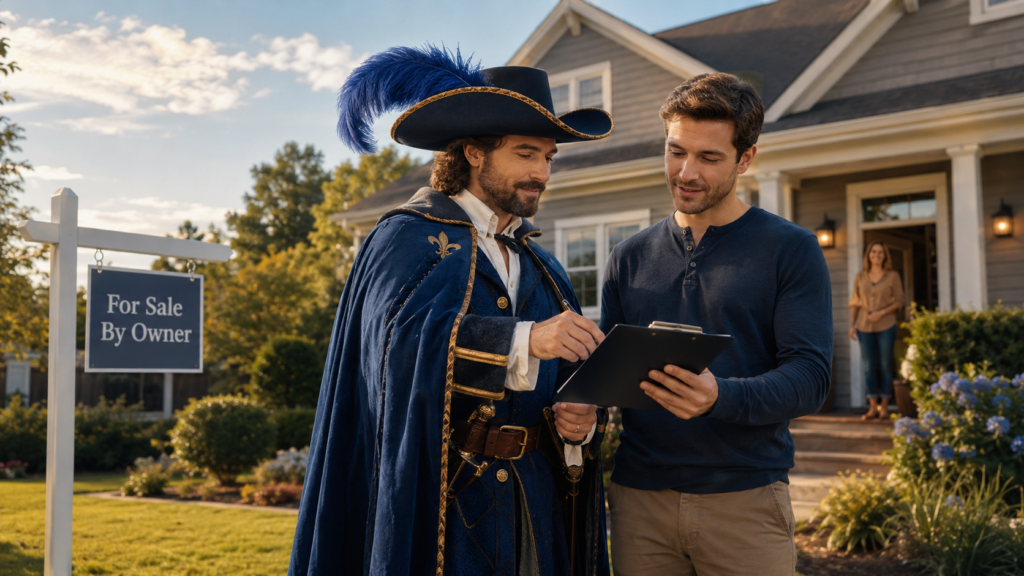
How to Buy a For Sale By Owner (FSBO) Home
Buying a For Sale By Owner—or FSBO—home with a mortgage is absolutely possible. It can be a great opportunity, especially when you already know the seller or have found a property that is not listed through a real estate agent. But without agents coordinating the transaction, the buyer and seller must be especially clear about the purchase contract, inspections, appraisal, title work, financing requirements, and closing responsibilities.
A FSBO purchase can be financed with a VA, FHA, Conventional, or USDA loan, or practically any other type of mortgage. The mortgage process is largely the same as any other home purchase, but the responsibilities normally handled or coordinated by real estate agents still have to be completed by someone.
Can You Get a Mortgage on a FSBO Home?
Yes. A buyer can use a mortgage to purchase a For Sale By Owner home.
The available loan programs are generally the same as they would be for a home listed through a real estate agent. Depending on the buyer, property, occupancy, and transaction details, a FSBO purchase can be financed with a VA, FHA, Conventional, or USDA loan. Other mortgage programs may also be available depending on the buyer, property, occupancy, and transaction details.
The lender is primarily concerned with whether the borrower qualifies, the property meets the loan program’s requirements, the title is acceptable, and the transaction is properly documented. The seller’s decision not to hire a listing agent does not automatically make the property ineligible for financing.
What changes is the amount of coordination required. Without real estate agents involved, the buyer and seller must make sure the purchase agreement, required addenda, appraisal access, inspections, title work, repair negotiations, and closing responsibilities are handled correctly and on time.
How Is a FSBO Purchase Different?
The mortgage itself is not necessarily different, but the coordination of the transaction is.
In a traditional home purchase, real estate agents often help keep track of the purchase contract, required addenda, earnest money, inspection deadlines, seller concessions, appraisal access, repair negotiations, and communication between everyone involved.
In a For Sale By Owner transaction, those responsibilities do not disappear. They simply have to be handled directly by the buyer and seller, often with help from the lender, title company, home inspector, or other qualified professional.
That makes clear communication especially important. Everyone should understand who is responsible for each step, what deadlines apply, and what documents are still needed. A FSBO purchase can move smoothly, but it usually requires the buyer and seller to be more involved and organized throughout the process.
Get Preapproved Before Negotiating
Before agreeing on a price or signing a contract, the buyer should get preapproved and review the proposed transaction with a loan officer.
A preapproval helps establish the buyer’s realistic price range, estimated monthly payment, required down payment, likely closing costs, and which loan programs may fit the property. It can also reveal whether the buyer may need the seller to contribute toward closing costs.
That matters because a buyer and seller can agree to terms that sound reasonable but do not work with the financing. For example, the contract may not include enough seller-paid closing costs, the property may not qualify for the intended loan program, or the proposed payment may be higher than the buyer expected.
Reviewing the financing first allows the buyer to negotiate with accurate numbers and helps both parties avoid rewriting the agreement—or losing the transaction—after the mortgage process has already started.
You Still Need a Written Purchase Contract
A FSBO purchase does not always require a complicated contract. From the lender’s perspective, the essential terms are usually straightforward:
- the buyer and seller
- the property address
- the agreed sales price
- the closing date
- the amount of any earnest money
- any seller-paid closing costs or other concessions
- the signatures and dates of both parties
We sometimes joke that the basic agreement could be written on the back of a napkin. The point is not that the contract should be careless. It is that mortgage underwriting generally needs a clear written agreement showing who is buying the property, who is selling it, what property is involved, and the financial terms everyone accepted.
For buyers and sellers who already know each other and have agreed on the major terms, a simplified FSBO contract can keep the transaction understandable and avoid unnecessary complexity. Lenders can often help provide a basic contract format that includes the information the lender and title company will need. Because we are assisting with the financing rather than providing legal representation, the agreement often includes a hold-harmless provision and makes clear that the parties are responsible for obtaining legal advice when needed.
The important distinction is between what is sufficient for financing and what may be necessary for legal protection. A simple contract may work perfectly when everyone agrees and the transaction closes as expected. However, additional provisions can become important if there is a dispute involving inspections, repairs, personal property, occupancy, missed deadlines, earnest money, default, or what happens if the sale does not close.
The goal is not to make every FSBO transaction complicated. It is to keep the lending terms simple and clear while making sure both parties understand the limits of a basic agreement and have the opportunity to consult a Kentucky real estate attorney when they want additional legal protection.
Who Holds the Earnest Money?
Earnest money is not always required in a For Sale By Owner transaction. In many FSBO purchases, especially when the buyer and seller already know each other and trust the agreed terms, no earnest money is collected at all. From the mortgage side, that can actually simplify the documentation process.
When earnest money is required, the purchase contract should clearly state:
- the amount of the deposit
- when it must be delivered
- who will hold it
- whether it will be credited toward the buyer’s funds due at closing
- what happens to the money if the transaction does not close
The deposit is commonly held by a title company, closing attorney, real estate brokerage, or another agreed-upon escrow holder. The buyer should receive and keep proof showing that the funds were delivered and deposited.
Avoid paying earnest money in cash. Mortgage underwriting will need to verify where the money came from and confirm that it belongs to the buyer. A personal check, cashier’s check, wire, or other traceable payment method is generally much easier to document.
If the buyer and seller decide that no earnest money is required, the contract should simply state that clearly. Earnest money is a negotiated contract term—not a requirement for obtaining the mortgage.
The Home Inspection and Appraisal Are Different
A home inspection is strongly recommended, but it is generally not required by the lender. The buyer may choose to skip the inspection to save money, especially when purchasing a property from someone they know or when the home is being accepted in its current condition.
That decision comes with risk. If the buyer chooses not to have the property inspected and later discovers problems with the roof, foundation, plumbing, electrical system, moisture, HVAC equipment, or other parts of the home, there may be little practical recourse—especially when the property was purchased as-is. Skipping the inspection means accepting the possibility that unknown defects may become the buyer’s responsibility after closing.
The mortgage appraisal is different. An appraisal is generally required when the purchase is being financed because the lender needs an independent opinion of the property’s value. Depending on the loan program, the appraiser may also identify visible health, safety, or property-condition concerns that must be addressed before closing.
An appraisal is not a home inspection. The appraiser does not perform the same detailed examination as a home inspector and is not there to identify every defect in the property. A home can appraise successfully and still have expensive problems that were not visible or were outside the scope of the appraisal.
The buyer can decide whether the cost of an inspection is worthwhile, but that decision should be made with a clear understanding of the risk being accepted.
The Property Must Meet the Loan Program’s Requirements
A FSBO property must meet the same loan-program requirements as any other home being purchased with financing. The fact that the seller is not using a real estate agent does not change the appraisal or property standards.
With a Conventional loan, the appraiser is primarily evaluating the home’s value, marketability, and overall condition. Minor cosmetic issues are often acceptable, but significant safety concerns, structural problems, unfinished construction, or conditions that affect the property’s value or livability may still have to be addressed.
FHA, VA, and USDA loans may involve additional health, safety, and property-condition requirements. An appraiser may call for repairs involving issues such as peeling paint, unsafe electrical conditions, missing handrails, active leaks, damaged flooring, inadequate heating, or other visible concerns that could affect the home’s safety or continued use.
This does not mean a property has to be perfect. Many older homes and homes needing minor repairs can still qualify. The important point is that the buyer and seller should understand the intended loan program before finalizing the agreement, because required repairs can affect the closing timeline, cost, and each party’s responsibilities. If the seller accepts an FHA, VA, or USDA loan and the appraisal requires repairs, they need to be prepared to fix the appraisal deficiencies in order to close the loan. That, or they need to work it out ahead of time with with the buyer in case the house needs repairs to pass the appraisal.
When possible, it is helpful to discuss obvious property concerns with the loan officer before ordering the appraisal. That will not replace the appraiser’s decision, but it may help the buyer and seller understand what issues could create financing complications.
Title Work Still Matters
Even in a For Sale By Owner transaction, the title company or closing attorney plays a critical role. Their job is to confirm that the seller actually has the legal right to transfer the property and that the buyer can receive clear, insurable title.
One of the more complicated problems occurs when ownership was never properly resolved after someone died. A family member may believe the property belongs to them, or they may have received a quitclaim deed from another relative, but that does not always mean every ownership interest was legally transferred. If probate was never completed or multiple heirs still have rights to the property, the person trying to sell may not have full authority to do so.
These issues can remain hidden for years because everyone involved may believe the ownership is settled. The problem often surfaces only when the title company reviews the chain of title and discovers unresolved estates, missing heirs, incomplete deeds, or conflicting ownership interests.
A title search may also uncover:
- existing mortgages that must be paid off
- judgments or liens
- unpaid property taxes
- ownership or inheritance disputes
- errors in deeds or legal descriptions
- easements, restrictions, or other recorded matters
When title problems are found, additional heirs may need to be located, probate may need to be completed, or corrective deeds may be required before the sale can close.
That is why title work should begin early in a FSBO transaction. The absence of real estate agents does not remove the need for clear ownership, and it is better to discover a title issue before the buyer spends money on an appraisal, inspection, or other services.
Understand Seller Concessions Before Finalizing the Contract
A common surprise for FSBO buyers is that the down payment is not the only money they may need at closing. Buyers will also have closing costs and prepaid expenses, including lender and title fees, homeowners insurance, property taxes, and the initial funding of an escrow account.
That is one of the reasons getting preapproved before negotiating the purchase is so important. A loan officer can estimate the buyer’s total cash requirement and determine whether asking the seller to contribute toward those expenses may be helpful.
In a transaction involving real estate agents, those figures are often discussed before the offer is written. In a For Sale By Owner purchase, the buyer and seller may agree on a price without realizing that closing costs and prepaids still have to be addressed. The loan officer may need to explain how those costs affect the buyer’s financing and what the applicable loan program permits.
The negotiation itself remains between the buyer and seller. A loan officer can explain the numbers, financing limits, and consequences of different contract terms, but is not acting as a real estate agent or negotiating on behalf of either party.
If the seller agrees to contribute, the concession should be stated clearly in the written contract as a dollar amount or percentage. A vague statement such as “the seller will help with closing costs” can create confusion because the lender and closing company need to know the exact agreement. At the other extreme, writing that “the seller will pay all closing costs” can also create confusion because closing costs and prepaid expenses are not necessarily the same thing. The amount, permitted uses, and contract language should be specific so the buyer is not unexpectedly required to bring more cash to closing.
The appropriate amount depends on the buyer’s loan program, down payment, actual closing costs, prepaid taxes and insurance, property type, and other transaction details. Asking for too little may leave the buyer short at closing, while asking for more than the buyer can use may not provide any additional benefit.
The best approach is to review the estimated financing first, allow the buyer and seller to negotiate with accurate information, and then make sure the final agreement is clearly documented in the contract.
Who Coordinates the Transaction?
In a traditional purchase, real estate agents often keep the different parts of the transaction moving and help everyone understand what comes next. In a For Sale By Owner purchase, there may be no single person performing that coordinating role.
Instead, responsibility is divided among the buyer, seller, lender, title company, appraiser, inspector, insurance agent, and any attorney or other professional the parties choose to involve. The transaction can still run smoothly, but the buyer and seller must be more engaged and communicate directly with the professionals handling each part.
The lender can explain the financing requirements, identify documents needed for underwriting, order the appraisal, and help the parties understand how proposed contract terms may affect the loan. However, the lender is not the buyer’s or seller’s real estate agent and does not represent either party in the negotiation.
A simplified breakdown looks like this:
| Responsibility | Usually Handled By |
|---|---|
| Financing, loan disclosures, and underwriting | Lender |
| Agreeing on price and transaction terms | Buyer and seller |
| Basic purchase contract and financing-related terms | Buyer and seller, with guidance from the lender on what financing requires |
| Legal advice or additional contract protections | Real estate attorney or other qualified legal professional |
| Earnest money and escrow, when applicable | Title company, closing attorney, brokerage, or other agreed escrow holder |
| Property inspection | Home inspector selected by the buyer |
| Appraisal | Lender and appraisal management company |
| Appraisal access | Seller, buyer, or another designated contact |
| Title search, deed preparation, and closing | Title company or closing attorney |
| Repairs and access to the property | Buyer and seller |
| Homeowners insurance | Buyer and insurance agent |
| Final funds and document signing | Buyer, seller, lender, and title/closing company |
The exact responsibilities may vary by transaction. The important thing is that everyone knows who is handling each task and that questions are addressed before deadlines are missed.
A FSBO purchase does not necessarily require more people. It requires the people who are involved to communicate clearly. When the buyer and seller already agree on the major terms and each professional stays within their role, the process can be straightforward and efficient.
A Gift of Equity May Reduce the Buyer’s Cash Requirement
When a family member agrees to sell the home to another family member for less than its appraised value, the difference may be treated as a gift of equity.
For example, if a home appraises for $250,000 and the agreed sales price is $225,000, the $25,000 difference may potentially be used toward the buyer’s required down payment, closing costs, or equity position, depending on the loan program and how the transaction is structured.
Unlike a traditional cash gift, the seller does not have to hand the buyer money for the gift of equity to exist. The gift is created by the difference between the home’s appraised value and the lower sales price. The lender will document the relationship between the buyer and seller, the appraised value, the contract price, and how the equity is being applied.
A gift of equity can significantly reduce the amount of cash the buyer must bring to closing and may make homeownership possible when a traditional down payment would otherwise be difficult. However, the rules vary by loan program, and the contract must be written correctly from the beginning.
Before the buyer and seller agree on the final terms, the loan officer should review:
- the expected appraised value
- the proposed sales price
- the buyer and seller relationship
- the buyer’s loan program
- the required down payment
- estimated closing costs and prepaids
- how much of the equity can actually be used
A poorly structured contract can reduce the benefit of the gift or create unnecessary problems during underwriting. Reviewing the numbers first allows the transaction to be written in a way that supports the buyer’s financing from the start.
Do Not Move In Before Reviewing the Financing
Buyers sometimes assume that moving into the home early will make the eventual purchase easier. It can do the opposite—and in some cases can make an otherwise workable loan temporarily impossible.
Moving into the property before purchasing it can change how the transaction is evaluated. Depending on the relationship between the buyer and seller, the occupancy arrangement, and the loan program, the purchase may be treated as a tenant-landlord or other non-arm’s-length transaction. That can create additional documentation, larger down-payment requirements, or other financing restrictions.
FHA financing deserves special attention. In certain tenant-landlord or identity-of-interest transactions, FHA may limit the loan to 85% of the property’s value unless an exception applies. One common exception involves a buyer who has rented and occupied the property for at least six months before signing the sales contract. A buyer expecting to use FHA with only 3.5% down may therefore discover that the financing no longer works as planned because they moved into the house before purchase. They now either need to wait 6 months or put 15% down. Neither scenario is usually what the buyer or seller planned and can create major issues for both parties.
That does not mean every buyer who moves in early is permanently unable to purchase the home. The result depends on the relationship between the parties, how the occupancy was established, the contract date, the available funds, and the selected loan program. But early occupancy can turn an otherwise straightforward purchase into a much more difficult transaction.
Before moving into a property you plan to buy, speak with a loan officer and determine:
- which loan program will be used
- whether the transaction may be considered non-arm’s-length
- whether a gift of equity is available
- how much cash the buyer will need
- whether early occupancy changes the financing terms
- what documentation will be required
The safest sequence is simple: review the financing first, sign the appropriate agreement, and move in only after the effect on the mortgage has been considered.
Step-by-Step FSBO Buyer Checklist
A successful For Sale By Owner purchase begins before the contract is signed. Use this checklist to keep the financing and transaction moving in the right order.
- Get preapproved before negotiating.
Review your price range, estimated payment, down payment, closing costs, prepaids, and available loan programs. - Discuss the property with your loan officer.
Confirm that the home and proposed transaction appear compatible with the intended Conventional, FHA, VA, or USDA financing. - Review the estimated cash needed at closing.
Determine whether seller-paid closing costs, a gift of equity, or another properly structured arrangement may be needed. - Agree on the major terms with the seller.
This includes the property, sales price, closing date, earnest money, seller concessions, and any personal property included in the sale. - Put the agreement in writing.
Use a clear purchase contract signed and dated by both parties. Buyers and sellers may seek legal advice when they want additional contract protections. - Send the signed contract to the lender immediately.
The lender needs the complete agreement to begin disclosures, underwriting, and the formal mortgage process. - Open title work early.
The title company or closing attorney will verify ownership, identify liens or unresolved estates, obtain payoff information, and confirm that the seller has the legal right to transfer the property. - Document any earnest money.
If earnest money is required, use a traceable payment method and keep proof that it was delivered and deposited. Avoid cash. - Decide whether to obtain a home inspection.
An inspection is usually optional but strongly recommended. Remember that the appraisal is not a substitute for an inspection. - Allow the appraisal to proceed.
The seller must provide access, and any appraisal-required repairs must be addressed before closing. - Obtain homeowners insurance.
The buyer should begin shopping early enough to avoid insurance-related delays or unexpected costs. - Respond quickly to lender and closing requests.
Provide requested documents promptly and avoid taking on new debt, moving money without documentation, or making major financial changes. - Do not move into the property early without reviewing the financing.
Early occupancy can change how the transaction is treated and may create additional loan restrictions. - Review the final figures and complete a final walkthrough.
Confirm the required funds, agreed repairs, property condition, and closing arrangements before signing. - Close the transaction and receive the keys.
Once the documents are signed, funds are disbursed, and ownership is properly transferred, the home officially belongs to the buyer.
Buying a Home Directly From the Owner?
A For Sale By Owner purchase can be a great opportunity, but it is much easier when the financing is reviewed before the buyer and seller lock themselves into terms that may not work.
I can help you understand the full picture before you sign anything, including:
- how much home you can realistically afford
- which loan program fits the property and your situation
- how much cash you may need for the down payment, closing costs, and prepaids
- whether seller concessions should be included
- whether a gift of equity may be available
- whether early occupancy, family relationships, or other special circumstances could affect the loan
- what the lender will need from both you and the seller
You do not have to figure out the mortgage side of a FSBO purchase on your own. I can review the proposed terms, explain the financing in plain language, and help you avoid preventable problems before they cost you time, money, or the opportunity to buy the home.
Important: This page provides general mortgage information and is not legal, tax, title, inspection, or real estate representation. FSBO buyers and sellers should consult the appropriate qualified professional when they need advice or protection in those areas. Loan requirements vary by program, lender, property, and transaction.
Call us Directly
Text us for a Quick Response