
USDA Home Loans for Rural Buyers
Discover the Benefits of USDA Rural Housing Loans
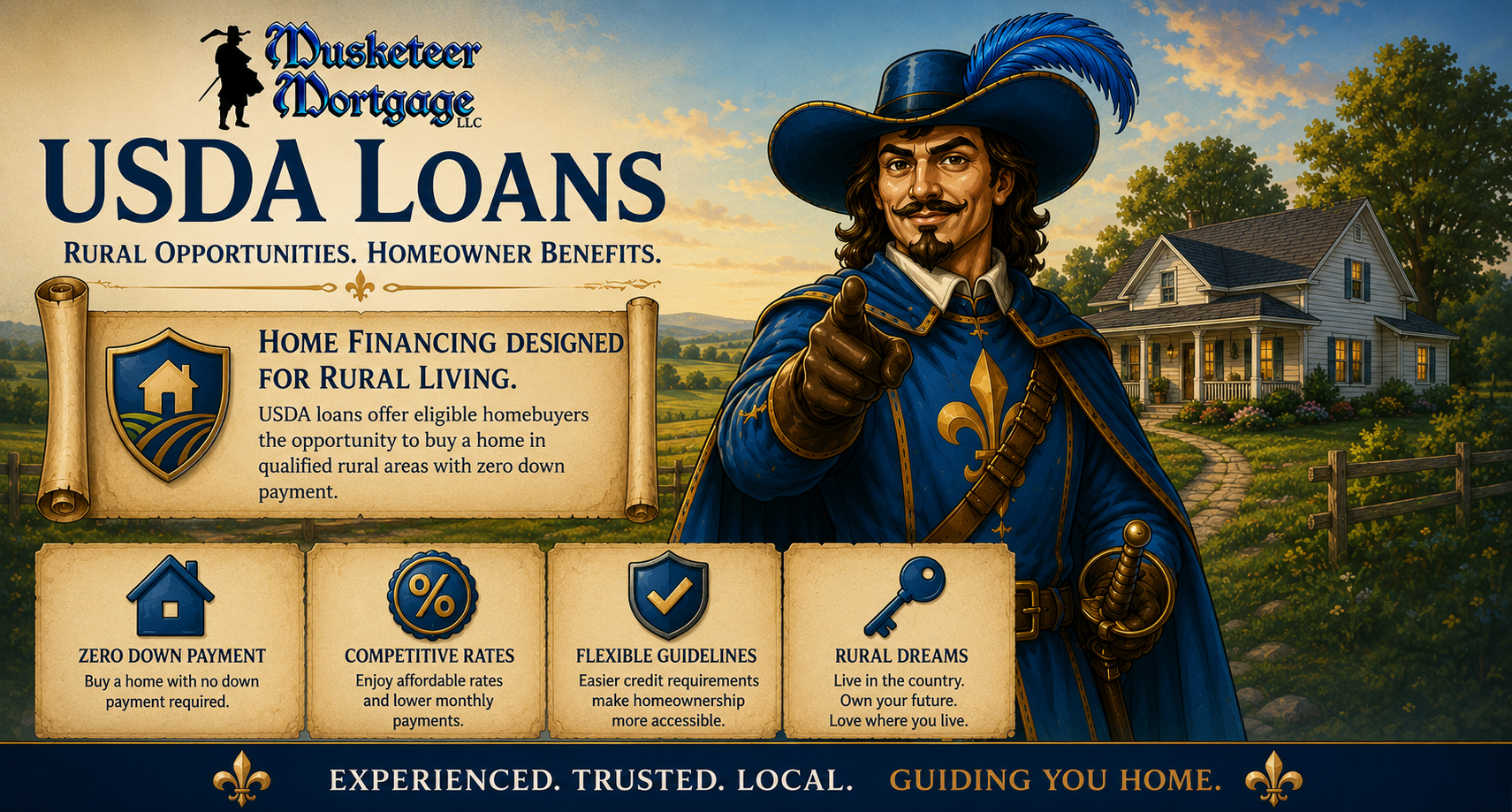
USDA home loans, also known as rural housing loans, are a unique government-backed mortgage option that can help you purchase a home in designated rural areas. They’re designed for low- to moderate-income buyers and offer competitive interest rates and long-term affordability.
Eligibility Requirements for USDA Loans
To qualify for a USDA loan, the property must be located in a USDA-eligible rural area. Not all rural-looking areas are eligible, so it’s important to check the exact address with your loan officer. Additionally, USDA loans are intended for primary residences only.
Your income must fall within the USDA guidelines for your area. Everyone living in the household—whether they’re on the loan or not—is included in the total income calculation. Certain deductions may apply for dependents, childcare expenses, or disability.
Understanding USDA DTI Guidelines
USDA loans come with specific debt-to-income (DTI) requirements. There are two types:
Front-end DTI: This looks at housing expenses only and must be at or below 29%.
Back-end DTI: This includes all monthly debts and must stay at or under 41%.
If your ratios fall outside these limits, it may impact your ability to qualify. However, we can often structure your prequalification to improve your chances.
USDA Income Limits Explained
Believe it or not, it is possible to make too much to qualify for a USDA loan. Income limits vary by location and household size and are based on census data. If your household includes multiple income earners, even those not listed on the mortgage, their income may still count toward the limit.
We’ll help you calculate your qualifying income based on these guidelines and show you how deductions might apply in your situation.
USDA Mortgage Insurance Updates
USDA loans include both upfront and monthly mortgage insurance, but the costs are lower than most other programs.
Upfront guarantee fee: 1% of the loan amount (reduced from 2.75%)
Monthly mortgage insurance: 0.35% annually (reduced from 0.5%)
These reduced fees make USDA one of the most affordable loan programs available.
Property Condition and USDA Appraisal Guidelines
USDA loans require the property to be in good condition. While not as strict as FHA, the appraisal process still looks for safety and livability issues. Avoid fixer-uppers unless you’re prepared to fix required items.
If the appraiser notes repairs, the seller typically must make them. Once complete, the appraiser may need to return to verify them. This could mean an additional charge of $175–$200. If repairs are not addressed, the loan cannot close.
Be aware that even small issues like a missing handrail or peeling paint can lead to an appraisal coming back “subject to” repairs.
USDA loans are an excellent option for the right buyer. If you’re shopping for a home in a rural area and want to explore affordable financing options, our team at Musketeer Mortgage is here to help.
USDA FAQs
I don't qualify for a USDA loan and I'm not a veteran. Are there any other zero money down programs?
No. There are some Down Payment Assistance (DPA) programs, but be careful. The devil is in the details. Call me and we can discuss. There may be another way.
What credit score do I need for a USDA loan?
Most lenders require a 640 or better, although there are exceptions where you can go as low as a 620.
Can I buy a $400,000 house with a USDA loan?
It depends. Unlike FHA there are no county loan limits that cap the maximum loan amount, but the way their parameters are structured you would most likely run into either a DTI issue or you would exceed the income caps set by USDA. Having said that, it’s always worth running the numbers. You never know.
How long does the mortgage insurance last on a USDA loan?
Mortgage insurance lasts for the life of the loan with USDA. If you want to drop your mortgage insurance, you will need to refinance into a conventional loan when you reach an 80% LTV.
Do I have to bring any cash to close since it's a USDA loan with no money down?
That depends. You won’t have any down payment requirements but you still have title work, any transfer taxes, state taxes/fees, home owner’s insurance, and your escrows. I can work up these numbers for you so you know how much cash you would need at closing. Your seller can contribute up to 6% of the sales price in seller concessions to cover your closing costs and prepaids. Your agent can talk to you about how that is negotiated. Every deal is unique; it depends on the seller and how much you are offering to buy their house. If your seller pays for your closing costs and prepaids, you can actually go to the closing table and just sign papers without having to bring a dime.
Why choose me as your USDA loan officer?
- We close USDA loans faster than other lenders
- Expert USDA processors
- Fantastic USDA rates
- Top government lenders